Local History
The Gaelic or Irish name for The Heath is An Fraoch Mór. Fraoch means 'heather' and mór means 'big'. The Heath is a flat area of roughly 425 acres, situated beside the main Dublin-Cork road, about four miles from the town
of Portlaoise. The area used to be known as The Heath of Maryborough.
Maryborough is the old name for Portlaoise. It was called this in honour of the English Queen Mary whose armies planted Laois in the sixteenth century. In 1920 the name was changed to Portlaoise which is Irish for 'the fort of Laois'. Today, The Heath is a common, but there are marks or ridges on the surface which, according to some people, prove that the land was once cultivated.
In the summer, The Heath is covered in lovely heather and yellow furze blossoms.
All over The Heath there are sheep that are free to roam wherever they like.
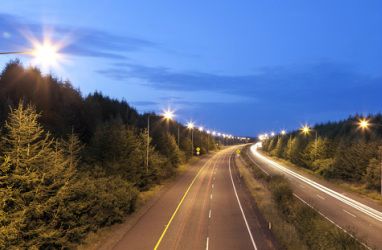
Near the school there is a small pond. Swans and ducks go there in the winter. The well-known Heath Golf Club is right beside this pond. In 1997, the Portlaoise By-Pass was officially opened. This motorway the M7 runs right through The Heath and has caused great changes in the local landscape. This photograph captures the motorway at night. Watch out for signs for The Heath as you drive on this Dublin/ Cork link.
Indeed work on the motorway in 1995 uncovered evidence of The Heath's ancient past. Four ring ditches were discovered together with furnaces and pits associated with iron smelting. Dating of the cremated bone, bronze artefacts and various objects of stone, glass and iron shows people living in the area in the last centuries B.C. This is in keeping with the Ring Barrows which are still visible in the area and are dated as being from up to 4000B.C. One of these barrows is to be found right beside the school!
The Heath has been used as a place of assembly since ancient times with gatherings such as The Aenach in which chariot races, games, festivities, marriages and business were transacted. With the advent of Christianity the parish and church of Killenny was founded. Some have suggested that the name derives from Cill Aenaigh, the church at the Place of Assembly. In the 18th and 19th centuries the area became famous for horse racing with cricket and GAA clubs also being founded in the late 19th century. This tradition of The Heath as a place of community recreation continues to this day with football, rounders, golf, horse riding and carting being practiced.

The Rock of Dunamase
This hill of hard limestone rock (about 60 metres above ground level) was marked on a map by Ptolemy in the 2nd century. It was called 'Dunum'. In Celtic Ireland, it was known as Dún Masc, the fort of Masc. Masc was a grandson of the King of Leinster. In 843, Dunamase was plundered by the Danes. In the 12th century, it belonged to Dermot Mac Murrough, King of Leinster. He was the man who invited the Normans to Ireland.
After the Norman Invasion in 1169, Richard de Clare, Earl of Pembroke (known as Strongbow) married Dermot's daughter, Aoife, and inherited the castle. In the 14th century, it was taken over by the O'Moores and, for the next two hundred years, the Irish and English fought over it. The O'Moores were the most famous Laois family and, even today, Laois is sometimes called 'The O'Moore County'. In 1650, Dunamase was destroyed by Oliver Cromwell's colonels Hewson and Reynolds. Today the castle is in ruins as depicted in our photo.
Killenny Church
Killenny Church marks the remains of the ancient parish of Killenny. Early historians attribute the name to Cill Eithne, the church of St. Eithne however in more recent times it has been suggested that the name may derive from Cill Aenaigh, the church of the place of assembly. Such an explanation would tie in with the common practice of early Christian churches being established where people gathered given the absence of towns and villages.
The remains of the church and its graveyard can be seen on Bobby Young's farm behind the current Catholic church. The parish of Killenny was always a small parish with 121 inhabitants recorded in 1831 and 154 in 1841 living in twenty five houses. The Church of the Assumption replaced this old church.
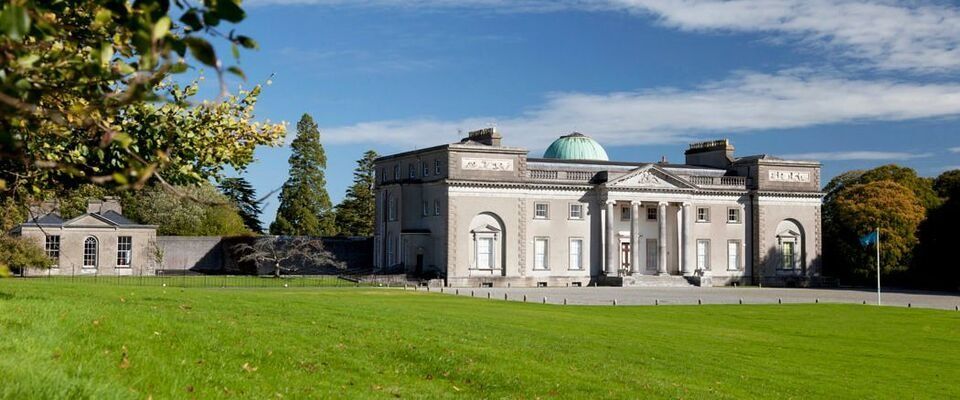
Emo Court
Work on this fine mansion (designed by the famous architect James Gandon) was started by the 1st Earl of Portarlington around 1790, but it wasn't completed until 1860, when the huge copper dome (known as a rotunda) was added. In 1930 the house was sold to the Jesuit Order of priests who used it as a seminary. The well-known Irish writer Benedict Kiely spent a short while there in the late 1930's.
In 1969, it was bought and beautifully restored by Mr Cholmley-Harrison. He later sold it to the government and it is now run by the Board Of Works. Each year thousands of people come to admire the house and walk around the lovely gardens. Sometimes classical music recitals and poetry readings are held there as well.
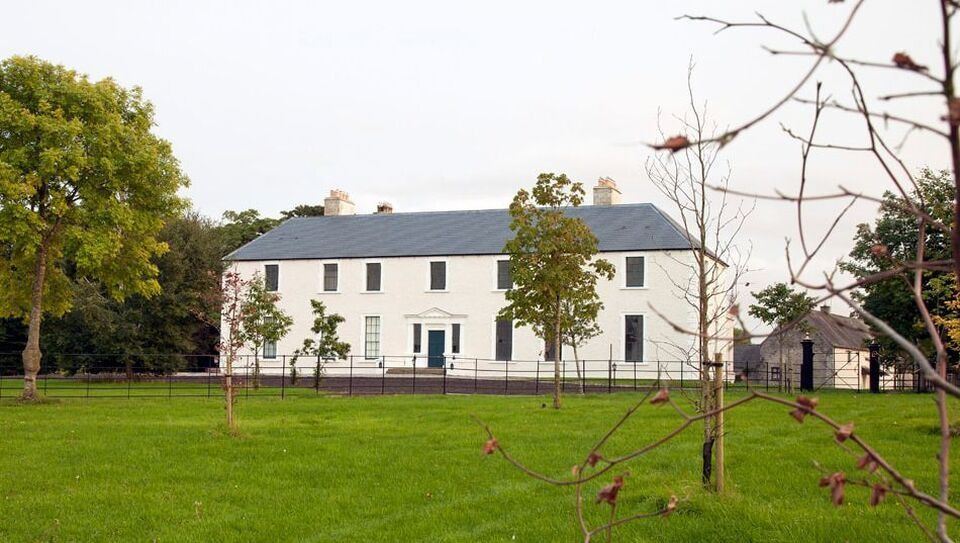
The Heath House
It is believed that this big house was built in 1727 by Warner Westenra whose family came originally from Holland. Since then, the house has had at least a dozen different owners. These are the family names: Saunderson (1765-1771), Burdett (1771-?), Gore (1804), O'Reilly (1804-1864) and Wall (1864-1880). The famous Gaelic scholar and placenames expert, John O'Donovan(1806-1861) was friend of Myles O'Reilly and, at one stage, he spent six months in Heath House recovering from an illness.
In 1880, the house was bought by Charles Blake who came from County Mayo. His family made it very famous as a racing stable. Many horses trained there won important races in Ireland and England. Colonel A.J Blake was Leading Trainer in 1930, 1931 and 1938. The Blakes eventually left Heath House in the early 1960's and the house was bought by a Dublin architect and writer named Uinseann Mac Eoin.
The house again changed hands in recent years and its new owners the O'Connell Husseys have totally renovated the house bringing both it and the grounds back to their former glory.